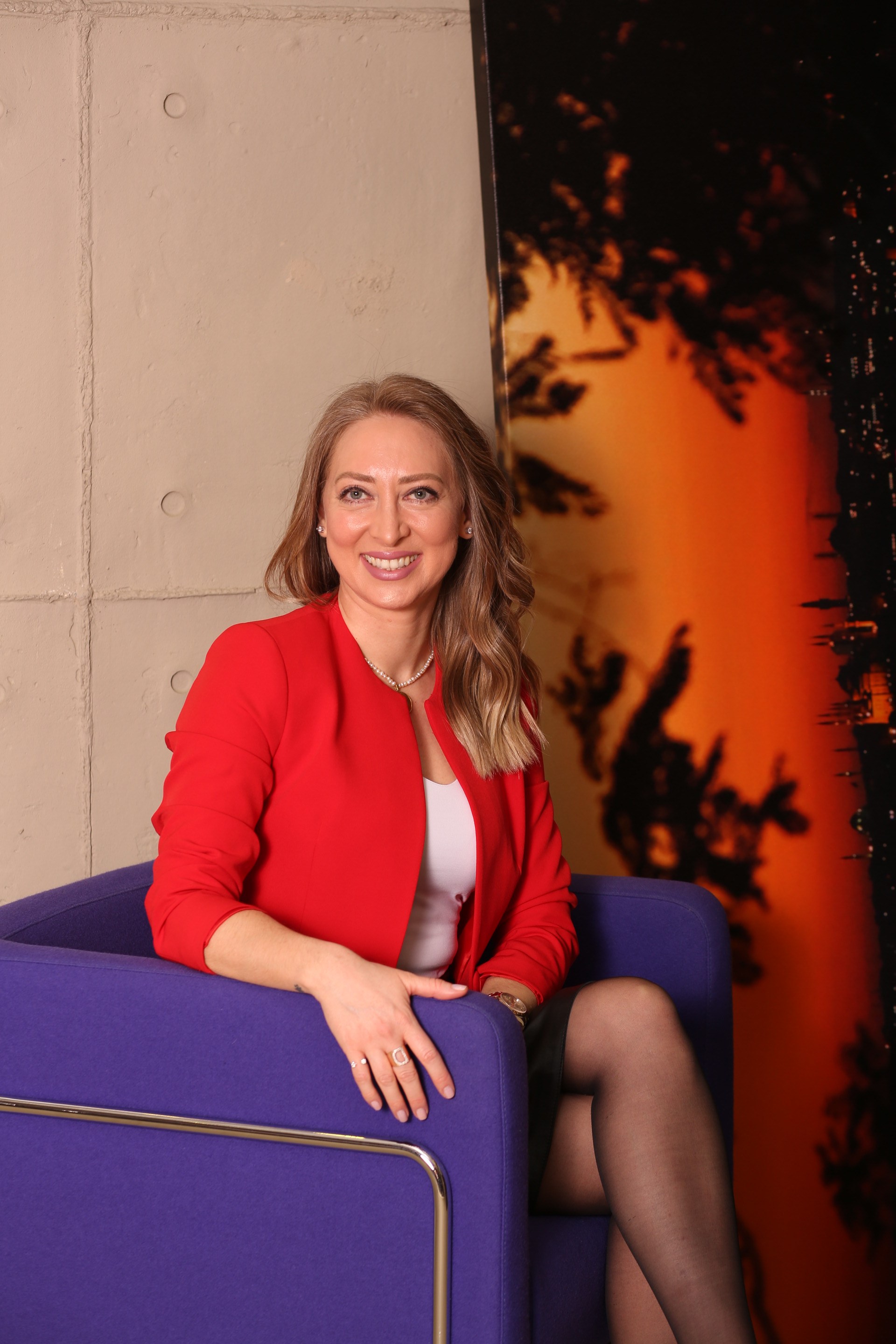
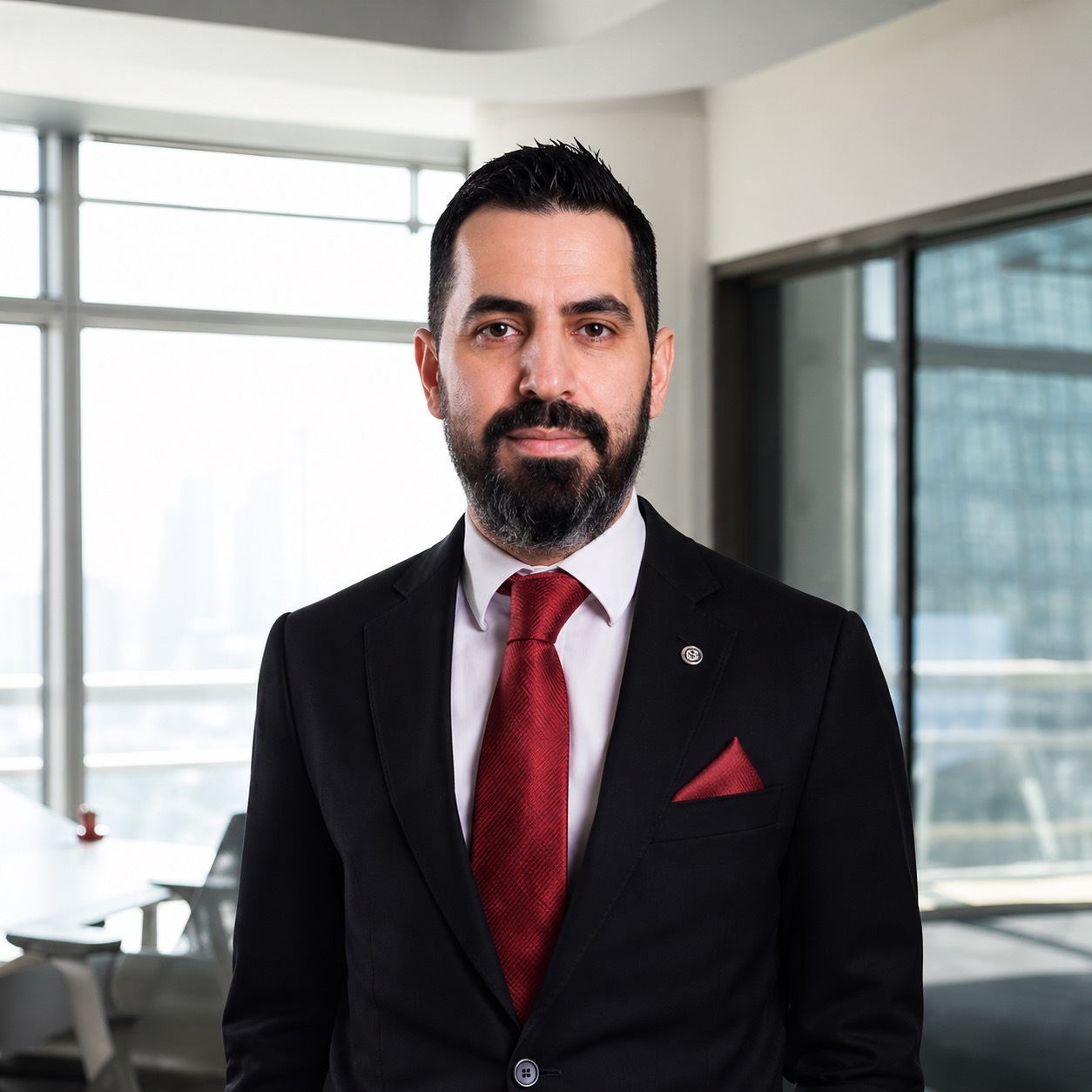
Müge Çelebi Özdemir
Financial Planning and Analysis Director
Microsoft MEA
We sit down with Müge Çelebi Özdemir, Financial Planning and Analysis Director at Microsoft MEA, to look at how hybrid working models and AI applications are rewiring business itself. From İstanbul Erkek Lisesi and Boğaziçi Economics to L’Oréal’s Finance Management Trainee programme and now Microsoft, Müge sits at the centre of the digitalization arc — and shares Microsoft’s view on the competencies the hybrid system demands, the leadership shifts required, and whether our infrastructure is actually ready for the change.
Full Conversation
MÜGE ÇELEBİ ÖZDEMİR FINANCIAL PLANNING AND ANALYSIS DIRECTOR MICROSOFT MEA
Muge Celebi Ozdemir, Financial Planning and Analysis Director of Microsoft MEA, is today’s guest of our article series "CFO Gozuyle", with the sponsorship of STS Bilişim/ Jedox. We continue to talk about what Covid19 and digitalization will change in our lives. Today, our guest Muge, gives us valuable clues about where the business life will evolve from now on, as the company she works for is at the center of digitalization with the mission. How are our ways of doing business changing with digitalization? The reflections of the applications supported by artificial intelligence on the working models, the risks they contain... The competencies required by the hybrid system, the leadership characteristics, the forms of communication we are used to, our priorities… Is our infrastructure sufficient to manage this change? Muge shared her views and Microsoft's solutions with us...
Could you briefly introduce yourself?
I completed Istanbul Erkek High School in 1999.
Then I graduated from Bogazici University, DeI started my career as a Finance Management
Trainee at L'oreal in 2004 and gained experience in finance operations, internal control processes
I have been working at Microsoft since 2015, and
I am currently the Director of Financial Planning and Analysis in the MEA region. Prior to this, I
held the role of Turkey, Israel and MEA HQ
Compliance Lead, Commercial Customers and Public Sector Financial Controller and Microsoft
Turkey CFO, respectively, in the Microsoft MEA region.
How did digitalization, accelerated by Covid 19 lead to a change in Microsoft's roadmap? What was Microsoft's contribution to the Covid process?
Microsoft has shifted 160,000 employees to remote work in the past year; It recruited 25,000 new employees entirely online. According to results from the Work Trend Index, 90% of Microsoft employees said they felt "involved".
When we look at the current Teams figures; Approximately 350 thousand active users in corporate customers in Turkey; We see that there are approximately 850 thousand users in education. These are close to 1.2 million active Teams users in total.
We increase customer loyalty with new methods such as multi-channel access opportunities, interconnected field operations and virtual assistant applications. For example, large retail institutions such as LC Waikiki are making a difference by using the Teams application today, with their efforts to increase customer satisfaction between the field, store and headquarters.
By using artificial intelligence and digital twins, we contribute to the establishment of smarter and agile factories that can be managed remotely. For example, Arçelik, in its digital transformation journey, takes advantage of the solutions offered by Microsoft Teams, PowerApps and Microsoft Dynamics Finance & Operations and Microsoft Bot Framework, while increasing its efficiency while accelerating its operational processes.
It is an issue that we attach great importance to support the employees in the hybrid working order, not only with products and services, but also psychologically. In this direction, Viva stands out among the applications that Microsoft has launched or updated during the pandemic process.
Microsoft Viva is the first employee experience platform of the digital age that combines the communication between teams and the individuals who make them up, the information they have, the resources they access, the training they receive and the insights they have, with the power of Microsoft 365 applications wherever they are on Microsoft Teams.
Research shows that employees are much happier and more productive when they can spare time for their physical and mental health, are aware of the institution they work for, and can always access training for their personal development. Developed to meet all these needs, Microsoft Viva currently includes 4 applications.
The first of the applications is Viva Connections, a Teams application named after your company and a gateway to the employee experience. Built on Microsoft Sharepoint and Yammer solutions, Connections can be customized for different in-house roles; a single point of personalized news, communications, tasks, people, and resources; An application accessible from desktop and mobile devices. With Connections, managers can communicate and interact with their employees, while employees can easily access the tools and resources they need from a single place.
The second app is Viva Insights. Workplace analytics brings together employee analytics apps like MyAnalytics and Glint in Teams. Thus, employees have access to actionable recommendations regarding their productivity and work-life balance. Managers can also have insights about the organization and interaction between teams that will increase productivity.
The third application, Viva Topics, analyzes all the information and expertise in the organization with artificial intelligence and presents it to the employees through topic cards. In this way, employees regain lost time searching and accessing knowledge and expertise.
Viva Learning, on the other hand, is a training center that customizes corporate training with artificial intelligence and makes it a part of daily life for employees. It takes content from Microsoft Learn, LinkedIn Learning and many other educational resources and combines it with the institution's own educational content, if any, on Teams. Managers can also perform training assignment, follow-up and reporting processes.
What are the priorities of Finance Directors in the new normal-digitalization process?
In the wake of the coronavirus pandemic, CFOs need an arsenal of tools to help them navigate post-Covid-19 waters. Technology investment has been at the center of the recovery process. Finance departments need to be agile and innovative to accelerate service delivery, attract and retain the right talent, enable seamless collaboration and communication to increase creativity, and adopt AI-powered services to find and analyze information and provide data to the business. It plays a critical role in transitioning to the "next normal". Data is the new Strategic Asset for CFOs. The amount of data is doubling every year around the world, and many of our customers have yet to establish their "single source of truth" Things are getting more complex day by day, having old tools developed for old business models does not help. It is a common priority of many industries to cope with the ever-increasing data in an environment of ever-changing and uncertainty, to use the data correctly and to make accurate predictions for the future. Intelligent technologies such as machine learning, big data analytics, and the flexibility of hybrid cloud computing can help. With the help of technology, organizations can become agile and access unprecedented data powered by a cloud-first infrastructure and predictive modeling to quickly predict and respond to trends.
How will risk management strategies change in the new period?
As the world grows new business risks and threats emerge, more regulation is needed. We are no longer relying on manual processes, we need to improve our tools to proactively help us mitigate risks
With many external factors such as regulations, geopolitical situations, market dynamics, cyber atacks, finance managers need to be careful against new and increasing risks every day.
The important thing is, how we can approach these changes and differences in a more pro-active way as a finance leader.
In modern finance we have more automated and centralized and standardized processes with emerging tools. Thus, we can reduce our costs and achieve higher quality and faster processes with less errors.
How will the management of digital teams be in the new era?
With the pandemic, we can say that the task and definition of the office has clearly changed. Even after the pandemic is completely over, it is not one hundred percent physical; We anticipate that it will continue in a hybrid working model.
At Microsoft we know that the future is in hybrid work. Organizations need to reconsider traditional notions of time and space about how, when and where we work. Going forward, every organization will need a new operating model for hybrid operation. At the very least, there seems to be a consensus that the 8-hour, 9-to-5 workday model is a thing of the past.
In the process, every organization will need new policies, redesigned physical spaces, and technologies that bring it all together. So what do we need to do for this?
I. Ensure policies empower employees for maximum flexibility: Who can work remotely? Who will need to come to the office and for how long? When people do focused work, where will they do it? So, what will the collaboration be like?
ii. Re-imagine your physical spaces: we are social creatures and want to be together, share ideas with each other and experience the energy of face-to-face events. Going forward, office space needs to bridge the physical and digital worlds and meet the unique needs of each team and specific roles.
iii. Invest in technology that connects people anywhere, anytime: As the pandemic has forced people everywhere to work remotely, video conferencing has been the primary tool people use to connect and keep business. Within months, people attended 55 percent more digital meetings than before Covid-19, and we've all noticed the stress and burnout associated with it. Video conferencing will always be important, but it is only a tool and does not provide the communication and collaboration infrastructure needed to support hybrid operation.
Of course, there are areas that hybrid work forces institutions. At this point, there are also new products developed to facilitate the management of teams in the digital environment and to make offices physically ready for hybrid work.
Many organizations have been caught off guard as they try to balance the time employees spend working remotely with their private lives. Although we see hybrid working as the ideal working model for now, there are also difficult aspects. For example, while remote workers think that they cannot make themselves heard enough, they cannot express themselves; those who are physically at work find it difficult to hold hybrid meetings that involve everyone.
According to research by Frost & Sullivan, only 7.8% of the 90 million meeting rooms where hybrid meetings take place worldwide have the necessary video and software system. This is a factor that weakens the meeting experience for remote attendees. In short, we can say that there is a long way to go here.
Offices are no longer just thinking about employees who come to the workplace physically; we need to design with remote workers in mind. The inclusivity of hybrid meetings was increased with the front row feature added to Teams Rooms last June, the Teams experience added to the Surface Hub, and the improved Microsoft Whiteboard feature that enables visual collaboration. Now it's time to take innovation one step further with smart cameras as part of Teams Rooms.
These smart cameras are powered by 3 different technologies:
Speaker tracking powered by artificial intelligence: Allows cameras to zoom and read gestures to better understand who is speaking in the room.
Multi-video streaming: Allows participants in the room to be in their own pods.
Human recognition: It recognizes its registered users and makes profile names appear in their own panes.
When smart cameras are paired with Dynamic View in Teams, a meeting environment is created where everyone can show their presence more effectively. As new people join the meeting, Teams automatically makes certain adjustments to ensure the visibility and understanding of the meeting room.
We would like to thank Muge for her contributions.
While the hybrid working model brings permanent changes to our lives with the convenience and difficulties it brings, it seems that the restructuring of the cultural and technological infrastructure investments of companies according to the requirements of this system will be a critical factor that will affect their success in the coming period.
Other CFO Gözüyle Episodes
Continue exploring perspectives from finance leaders